In today’s fast-paced world, where stress and anxiety often feel like unwelcome companions, finding a sanctuary for our minds is more crucial than ever. Enter yoga—a timeless practice that not only strengthens the body but also nurtures the soul. Imagine stepping onto your mat, feeling your breath deepen as you flow through poses designed to calm your racing thoughts and center your spirit. In this blog post, we’ll explore how specific yoga poses and mindful practices can serve as powerful tools for mental wellness, offering relief from anxiety and paving the way for inner peace. Whether you’re a seasoned yogi or just starting out on your journey, join us as we unlock the transformative power of yoga in fostering tranquility amidst life’s chaos!
Introduction to the benefits of yoga for mental wellness
In our fast-paced world, mental wellness has become more crucial than ever. With the pressures of daily life often leaving us feeling overwhelmed and anxious, finding effective tools for relief is essential. Yoga offers a holistic approach to nurturing both body and mind. This ancient practice not only promotes physical flexibility but also cultivates a sense of peace that can help alleviate anxiety.
Imagine stepping onto your mat, taking a deep breath, and letting go of the stresses that weigh you down. Each pose becomes an opportunity to reconnect with yourself and find solace in the present moment. Whether you’re new to yoga or have been practicing for years, integrating it into your self-care routine can lead to profound improvements in mental well-being. Let’s explore how yoga can transform your relationship with anxiety and pave the way toward a calmer state of mind.
Understanding anxiety and how yoga can help
Anxiety is a common experience, often characterized by feelings of worry and unease. It can manifest physically, mentally, and emotionally, creating a sense of overwhelm that interferes with daily life.
Yoga offers a gentle approach to managing anxiety. Through mindful movement and breathwork, it helps create balance in the body and mind. Practicing yoga encourages a state of relaxation that counters anxiety’s grip.
The focus on the present moment during yoga practice diverts attention from anxious thoughts. As you flow through poses, you become aware of your breath and sensations in your body. This awareness fosters calmness.
Additionally, specific postures can release tension stored in muscles while promoting emotional release. Yoga creates space for self-reflection and healing—essential components in addressing anxiety effectively. Embracing this ancient practice can pave the way for enhanced mental wellness over time.
The science behind yoga and its effects on the brain
Research shows that yoga has profound effects on brain function. Regular practice can enhance neuroplasticity, the brain’s ability to adapt and reorganize itself. This adaptability helps in coping with stress and anxiety.
Yoga stimulates the release of neurotransmitters like gamma-aminobutyric acid (GABA). Higher levels of GABA are linked to reduced anxiety and improved mood.
Additionally, studies indicate that mindfulness meditation within yoga reduces activity in the amygdala, the brain region responsible for fear responses. This calming effect allows individuals to manage their emotions better.
Moreover, engaging in mindful movements promotes connectivity between different parts of the brain. Enhanced communication leads to improved emotional regulation and cognitive function.
Ultimately, these scientific findings highlight how yoga acts as a powerful tool for mental wellness by promoting a more balanced state of mind through physical movement and breath awareness.
Must Visit: 300 Hour Yoga Teacher Training in Kerala
Top poses and practices for anxiety relief, including step-by-step instructions and modifications
Child’s Pose is a gentle way to ease anxiety. Start by kneeling on your mat, then sit back onto your heels. Stretch your arms forward and rest your forehead on the ground. Feel the tension melt away as you breathe deeply.
Another beneficial pose is Legs-Up-The-Wall. Lie down on your back and extend your legs up against a wall, forming an L-shape with your body. This inversion can calm the nervous system while promoting relaxation.
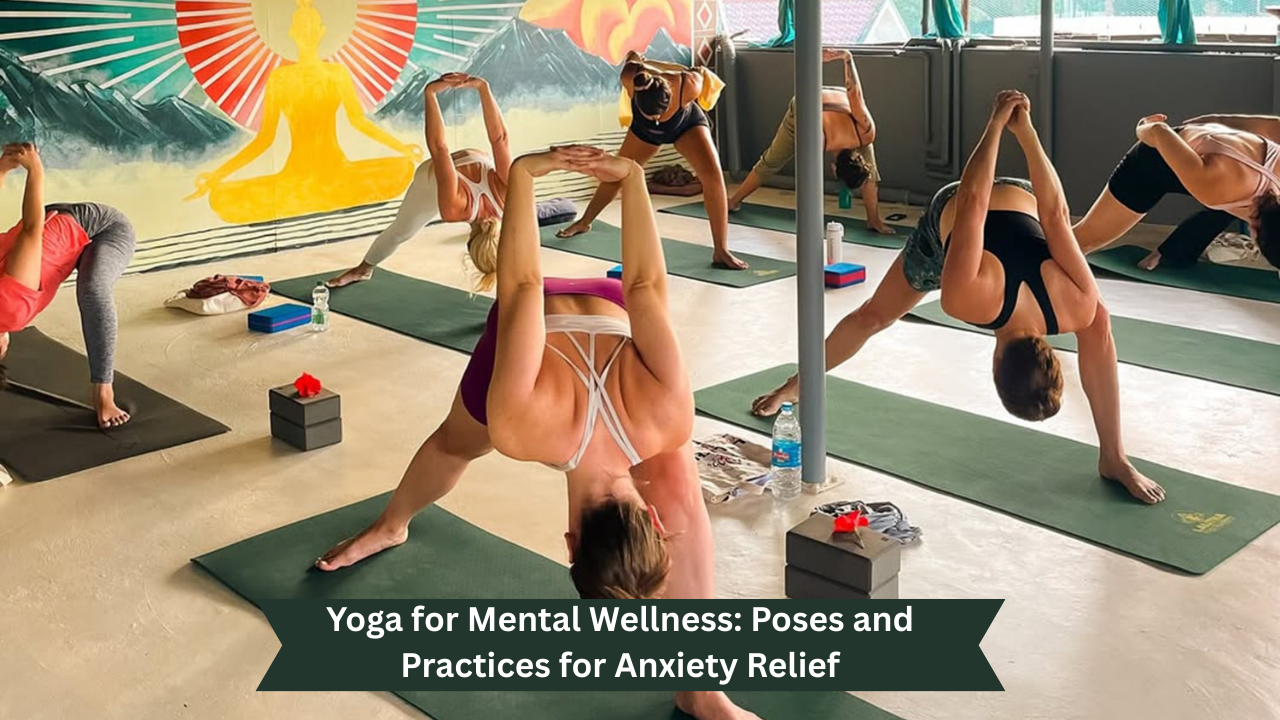
For those looking for something more active, try Warrior II. Stand tall with feet wide apart, turn one foot outwards and bend that knee while extending both arms parallel to the floor. This empowering stance boosts confidence and helps release stress.
Don’t hesitate to modify these poses according to what feels right for you. Use props like blocks or cushions for support when needed; comfort is key in reducing anxiety during practice.
The importance of breathwork in managing anxiety
Breathwork serves as a powerful tool in managing anxiety. By focusing on the breath, we can anchor ourselves in the present moment. This simple act can shift our mental state significantly.
When anxious thoughts arise, they often lead to rapid, shallow breathing. Breathwork counteracts this by promoting deep and rhythmic breaths. This practice calms the nervous system and reduces stress hormones.
Engaging in conscious breathing activates the parasympathetic nervous system. It encourages relaxation and helps to alleviate feelings of panic or unease.
Integrating breath exercises into your yoga routine enhances their benefits. Techniques like diaphragmatic breathing or box breathing create a deeper connection between mind and body.
Through regular practice, breathwork empowers you to take control during moments of high anxiety. It’s not just about calming down; it’s about building resilience for future challenges.
Incorporating mindfulness into your yoga practice for improved mental well-being
Mindfulness is a powerful tool when combined with yoga. It enhances your practice and heightens awareness of the present moment.
Begin by focusing on your breath as you move through each pose. Notice how it feels to inhale and exhale, creating a rhythm that anchors you in the now.
As thoughts arise, acknowledge them without judgment, then gently redirect your focus back to your breath or body sensations. This simple act cultivates mental clarity and calms anxiety.
Try setting an intention before starting your session. Reflect on what you hope to gain from this time—be it peace, strength, or self-acceptance.
Integrating mindfulness doesn’t just elevate your yoga experience; it spills over into daily life too. You might notice moments of stress becoming more manageable as you practice being fully present both on and off the mat.
Other helpful tips for using yoga as a tool for anxiety management
Creating a dedicated space for your yoga practice can enhance your experience. Find a quiet corner in your home where you feel comfortable and at ease.
Set aside regular time for practice, even if it’s just 10 minutes each day. Consistency fosters comfort and allows you to track progress over time.
Consider pairing yoga with journaling. Write down thoughts or feelings before and after classes to observe how the practice impacts your mental state.
Listen to calming music or nature sounds during sessions. This can heighten relaxation and help anchor your mind away from anxious thoughts.
Joining a community class can also provide support. Sharing experiences with others creates connection, which is vital for mental wellness.
Explore different styles of yoga too. Kundalini, restorative, or yin might resonate differently based on what you’re experiencing emotionally that day.
Conclusion: Encouragement to try incorporating yoga into your self-care routine for better mental health.
Embracing yoga as part of your self-care routine can be transformative for your mental wellness. The practice offers an array of benefits, especially when it comes to managing anxiety. Through mindful movements and breath control, you can cultivate a sense of peace within yourself.
Start with small steps. Even dedicating just a few minutes each day to yoga can yield significant improvements in your mood and overall well-being. Explore the poses mentioned earlier, tailoring them to suit your comfort level.
Remember that consistency is key. As you regularly engage in yoga, you’ll likely notice a shift not only in how you feel but also in how you respond to stressors around you. Your journey into this practice doesn’t have to be perfect; it simply needs to resonate with you.
Consider pairing your physical practice with mindfulness techniques for even greater impact on mental health. Journaling about your experiences or meditating after a session might deepen the benefits further.
Ultimately, nurturing both body and mind through yoga can become an empowering tool against anxiety’s hold on your life. Make space for this ancient art form within your schedule—it may very well enhance not just moments of calm but enrich every aspect of daily living too.
Learn more about Yoga for Mental Wellness. You Can Join our best yoga teacher training in Kerala.